To book: The tour with the archaeologist, from $55 per person. Check dates Tour details
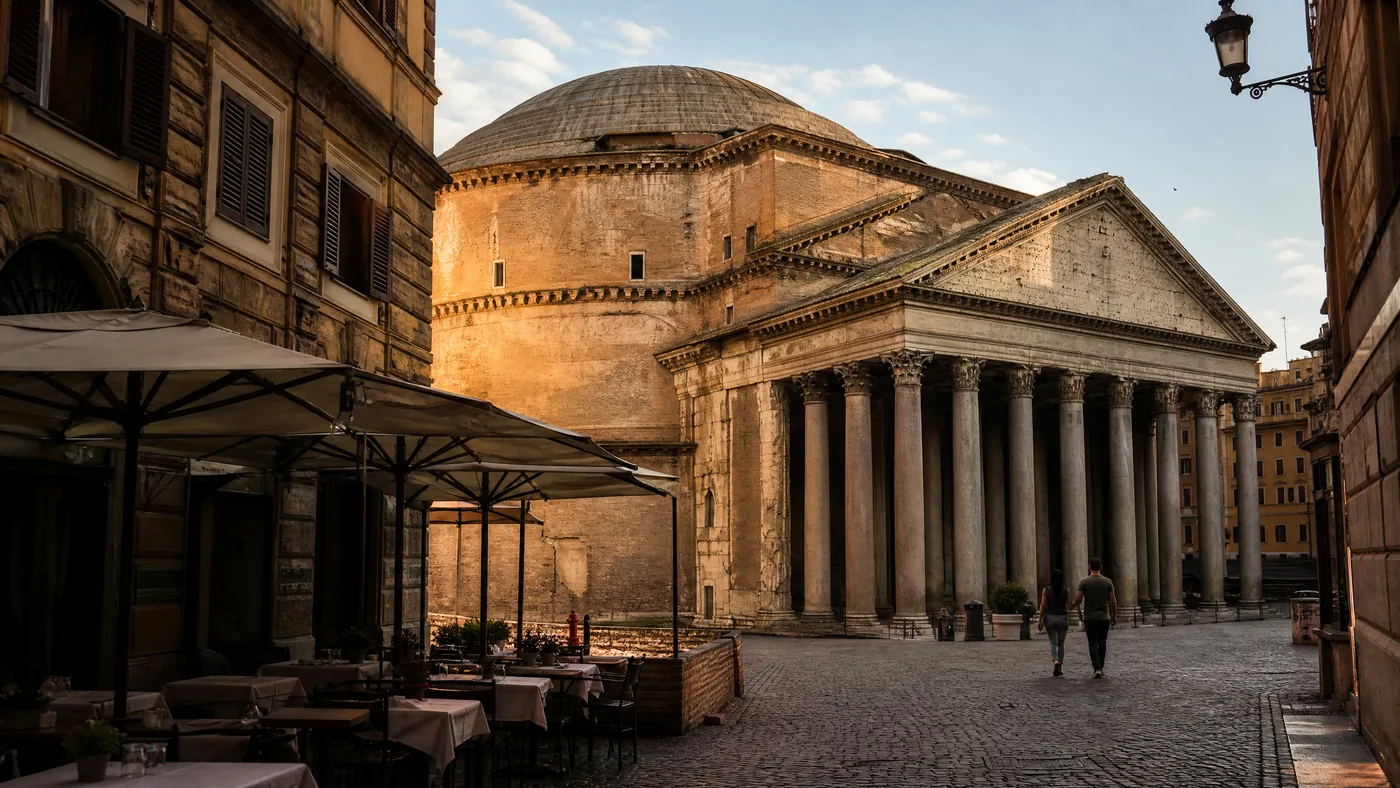
The Pantheon you see today is almost 1,900 years old, but it is not the first. Before it, there was a temple commissioned by Marcus Agrippa, in the time of Augustus. It burned down, was rebuilt, and burned again.
This history follows Wikipedia, in the English and Italianversions, with the dates that matter and a few details to look for when you are inside.
The short answer
The first temple was commissioned by Agrippa under Augustus. It burned in 80 AD, Domitian rebuilt it, and it burned again in 110. The current building was completed under Hadrian and probably dedicated around 126. Since May 13, 609, it has been a church, and continuous use is the main reason it has survived to this day.
Who built the Pantheon?
Emperor Hadrian: the current Pantheon was completed under him and probably dedicated around 126 AD. It stands where Agrippa’s temple was.
Agrippa built the first Pantheon within a complex on the Campus Martius, between 29 and 19 BC, along with the Baths of Agrippa and the Basilica of Neptune. That temple burned in 80 AD. Domitian rebuilt it, and in 110 it burned again. Then Hadrian arrived.
Why is Agrippa’s name on the Pantheon’s facade?
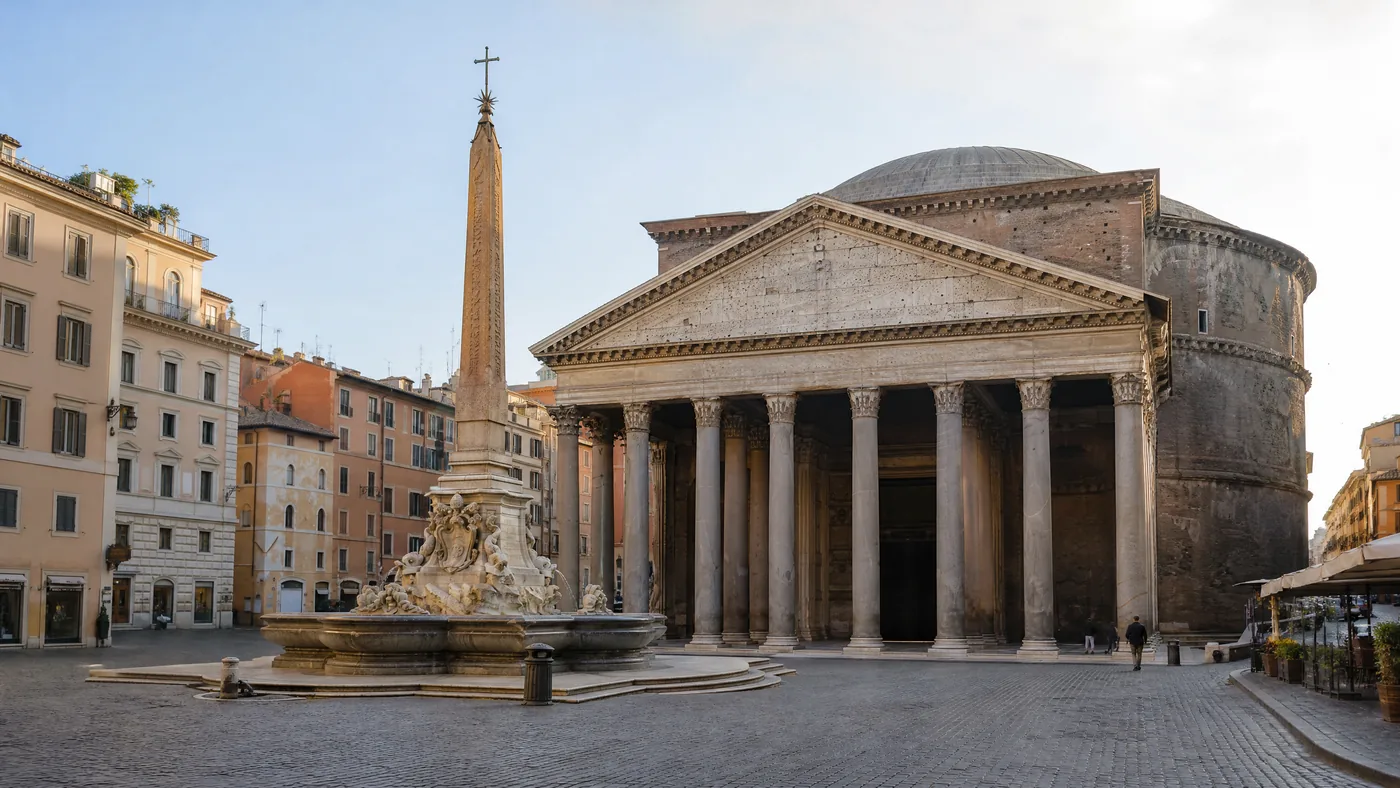
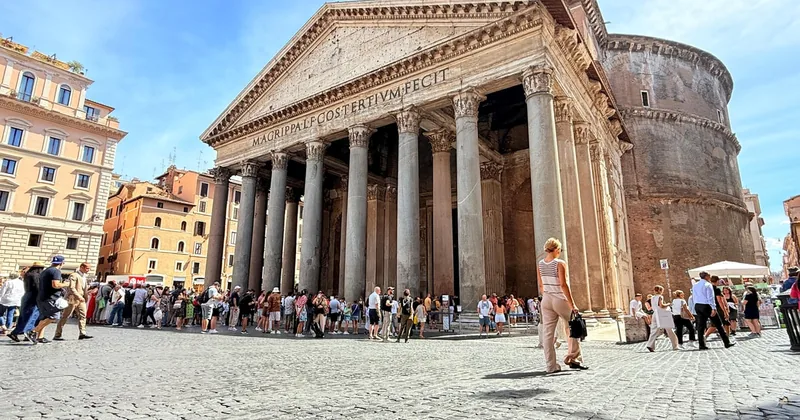
Why Hadrian had the original inscription remade: M AGRIPPA L F COS TERTIVM FECIT, «Marcus Agrippa, son of Lucius, consul for the third time, made this».
A curious case. The man who built the building did not sign it, and left the credit to the one who had built the previous one, more than a century earlier.
Look below the large letters. On the architrave there is a second, smaller inscription from the Severan era: it recalls a restoration of the Pantheon «damaged by time, with all its ornaments», as reported by Wikipedia.
When did the Pantheon become a church?
May 13, 609. Pope Boniface IV consecrated it to Santa Maria and the Martyrs, after Byzantine Emperor Phocas had donated the building to him.
Since then it has been the Basilica of Santa Maria ad Martyres. The Romans called it «the Rotunda», and from this comes the name of the square in front. It is still an active church: Mass is celebrated on Saturday at 17:00 and on Sunday at 10:30.
According to the tradition reported by Wikipedia, at the consecration, 28 carts of martyrs' relics were brought from the catacombs and placed in a porphyry basin under the high altar.
An archaeologist, a semi-private group, and an hour and a half of clues and symbols, inside and around the Pantheon.
Check dates for the tour with the archaeologistWhy is the Pantheon so well preserved?
Because of continuous use. Having become a church in 609, it was never abandoned, and this saved it from looting.
Not entirely, though. Pope Urban VIII, a Barberini, had the bronze beams of the portico melted down. The Romans responded with a phrase that has remained famous: «quod non fecerunt barbari fecerunt Barberini», what the barbarians did not do, the Barberini did.
Then came the restorations. In 1753, with the interior in poor condition, a rotating scaffold allowed access to the coffers, which were whitewashed with lime, and architect Paolo Posi redid the attic under the dome in neoclassical style. In 1998, the bronze doors were fully restored with new hinges.
Why hasn’t the Pantheon’s dome collapsed?
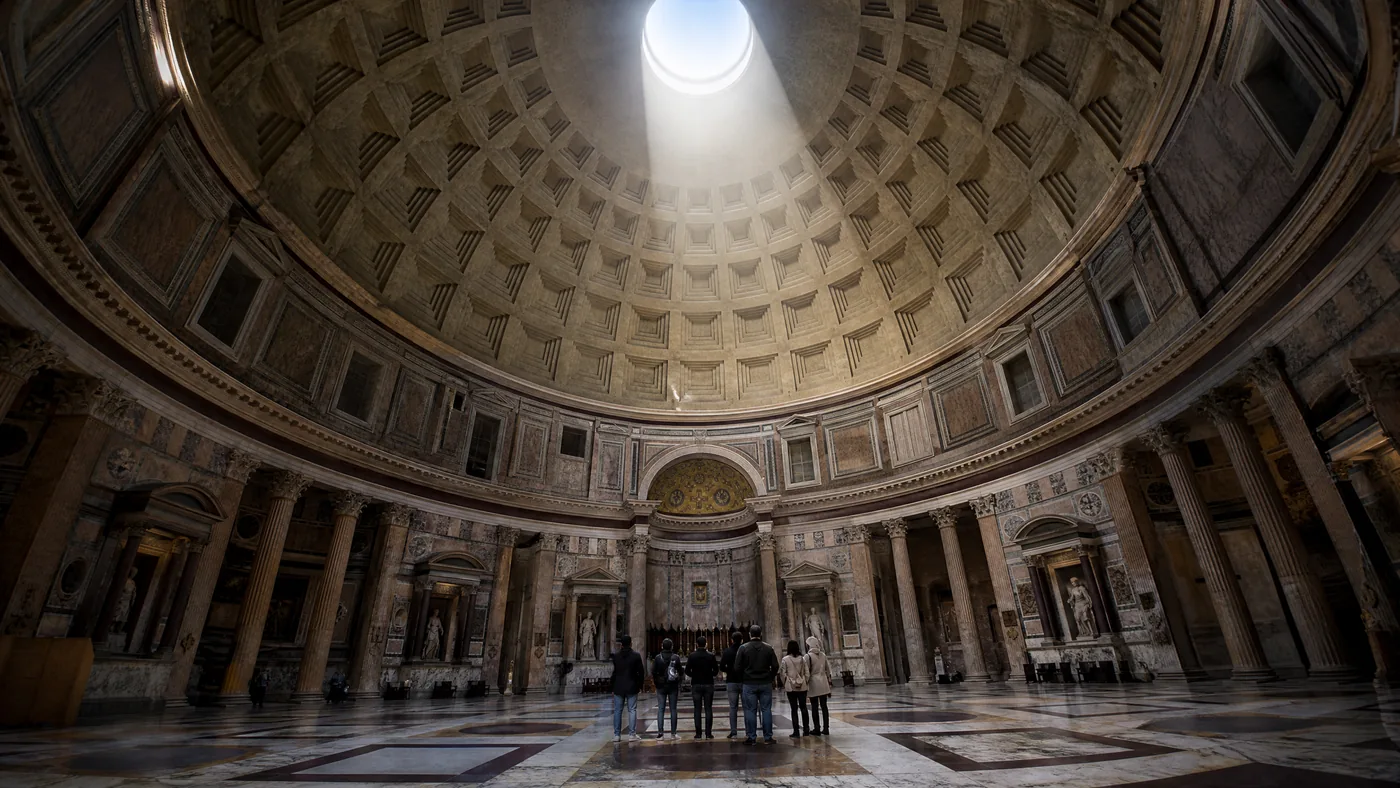
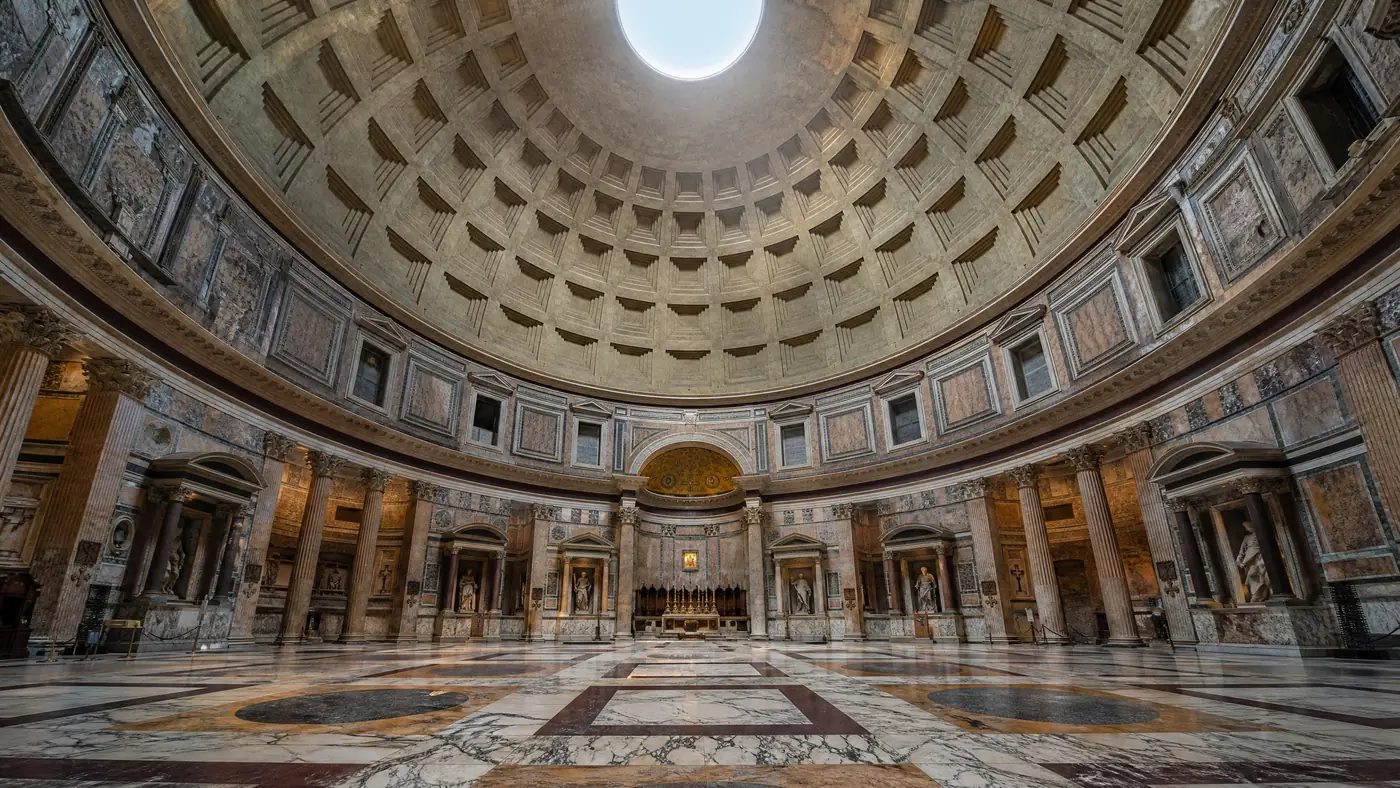
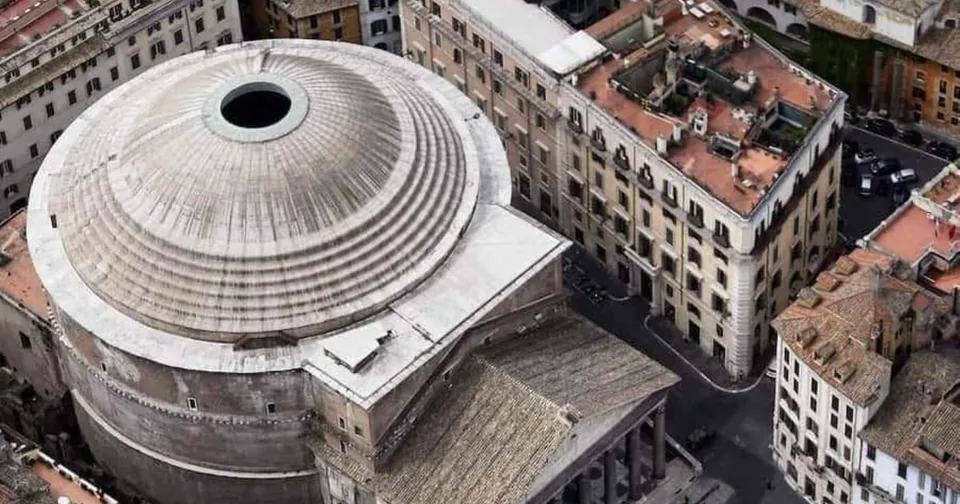
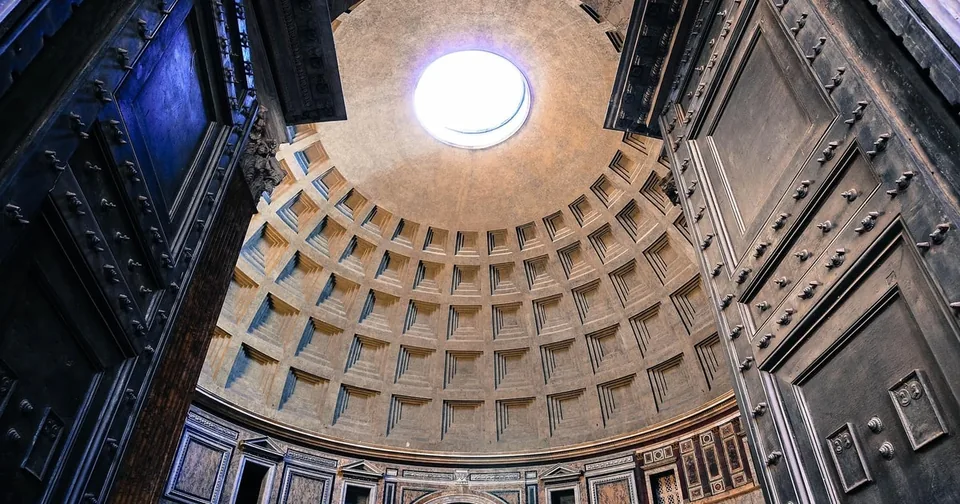
Because it becomes thinner and lighter as it rises: the thickness goes from 6.4 metres at the base to 1.2 metres around the oculus.
The concrete also changes with height. According to Wikipedia at the bottom there is travertine, then terracotta, and at the top tufa and pumice, porous and light stones. At the top, where the dome would be weakest, the oculus removes weight. Result: almost 2,000 years later, it is still the largest unreinforced concrete dome in the world, with a diameter of 43.3 metres.
Where do the portico columns come from?
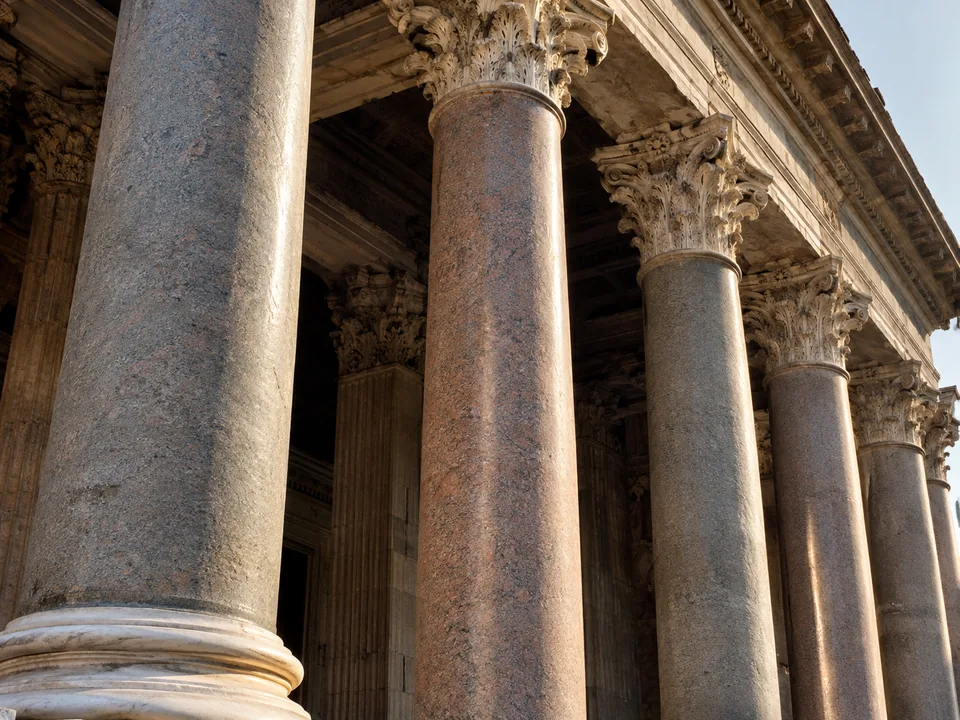
From Egypt. The grey granite comes from Mons Claudianus, the pink from Aswan.
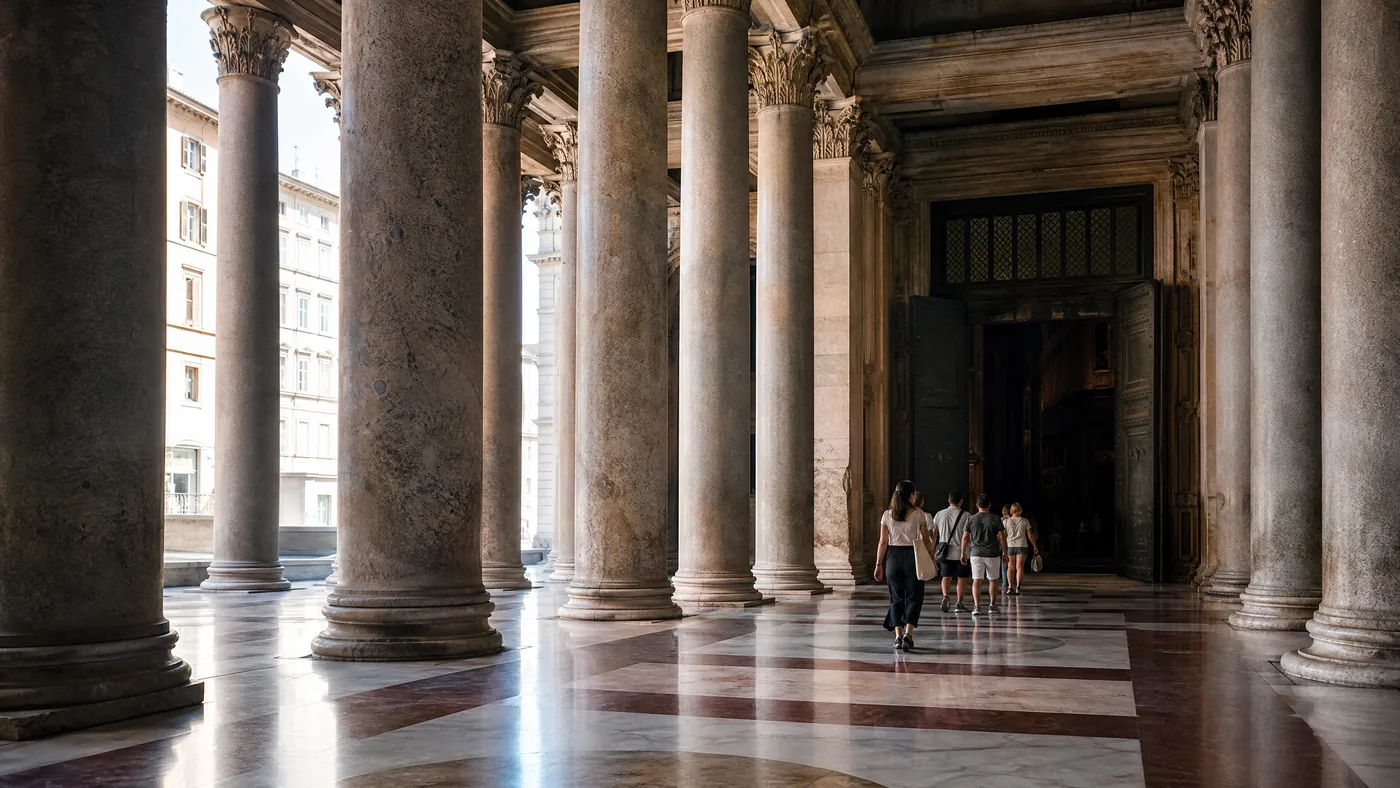
There are 16 columns, Corinthian: 8 on the front and two groups of 4 behind. Each is 11.9 metres tall and weighs about 60 tonnes.
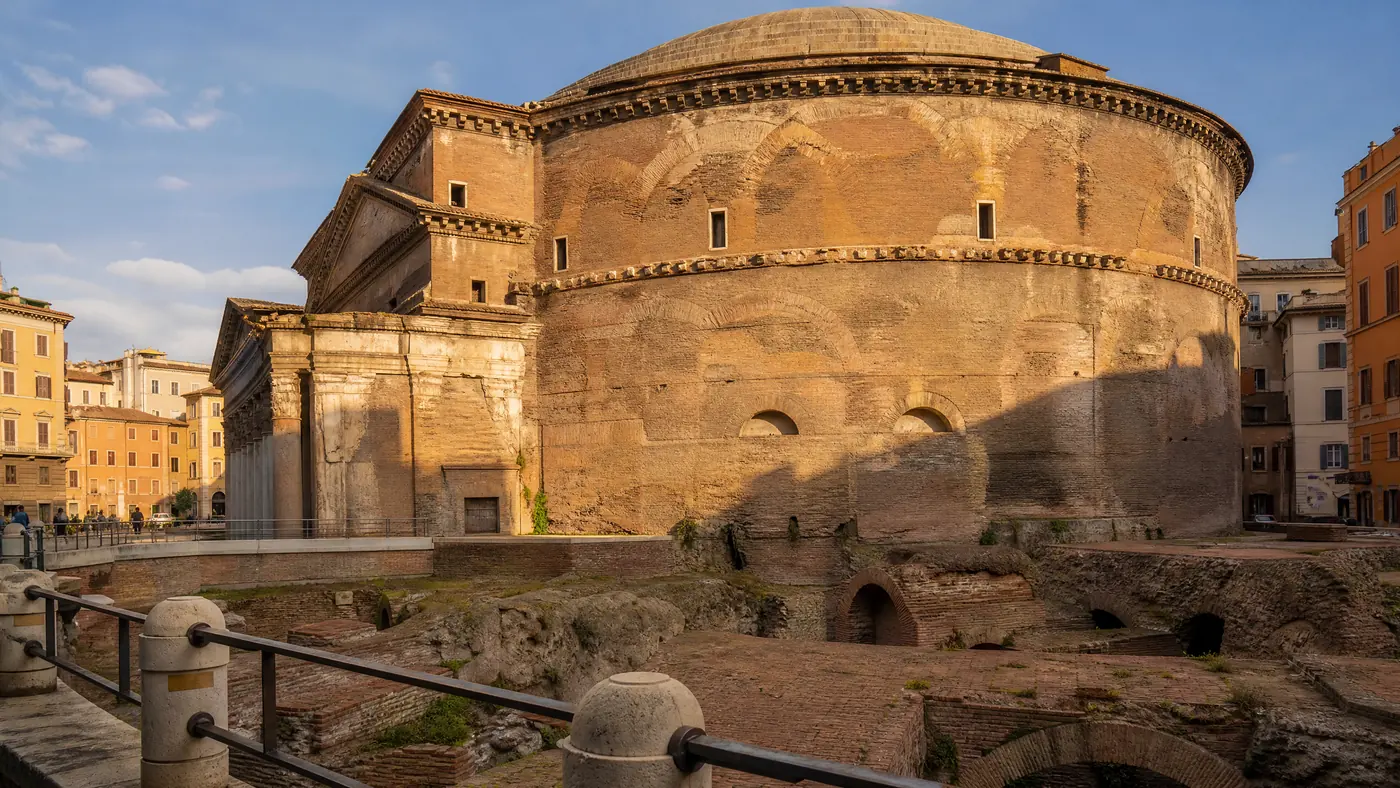
What is the Basilica of Neptune behind the Pantheon?
A building in Agrippa’s complex, next to the Pantheon. Today, only ruins remain, which can be visited with some guided tours.
Two listings include them. The tour with the Basilica of Neptune brings a guide among the ruins, with projections, and then inside the Pantheon. The small group with exclusive access opens them only with its special option.
To understand where you are, imagine the Campus Martius in Agrippa's time. According to Wikipedia the complex aligned three buildings from south to north: the Baths of Agrippa, the Basilica of Neptune, and the Pantheon. Everything stood on Agrippa's land, and Pantheon and Basilica of Neptune were probably private sacred buildings, not public temples. This would help explain why the Pantheon lost its original name and function so early.
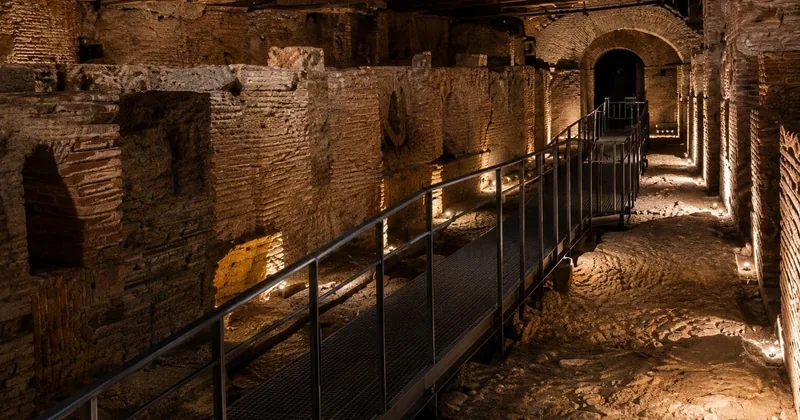
A guide, the Pantheon ticket, and access to the ruins of the Basilica of Neptune, in an hour and a half.
Discover the tour with the Basilica of Neptune Tour detailsWhat happens at the Pantheon on Pentecost?
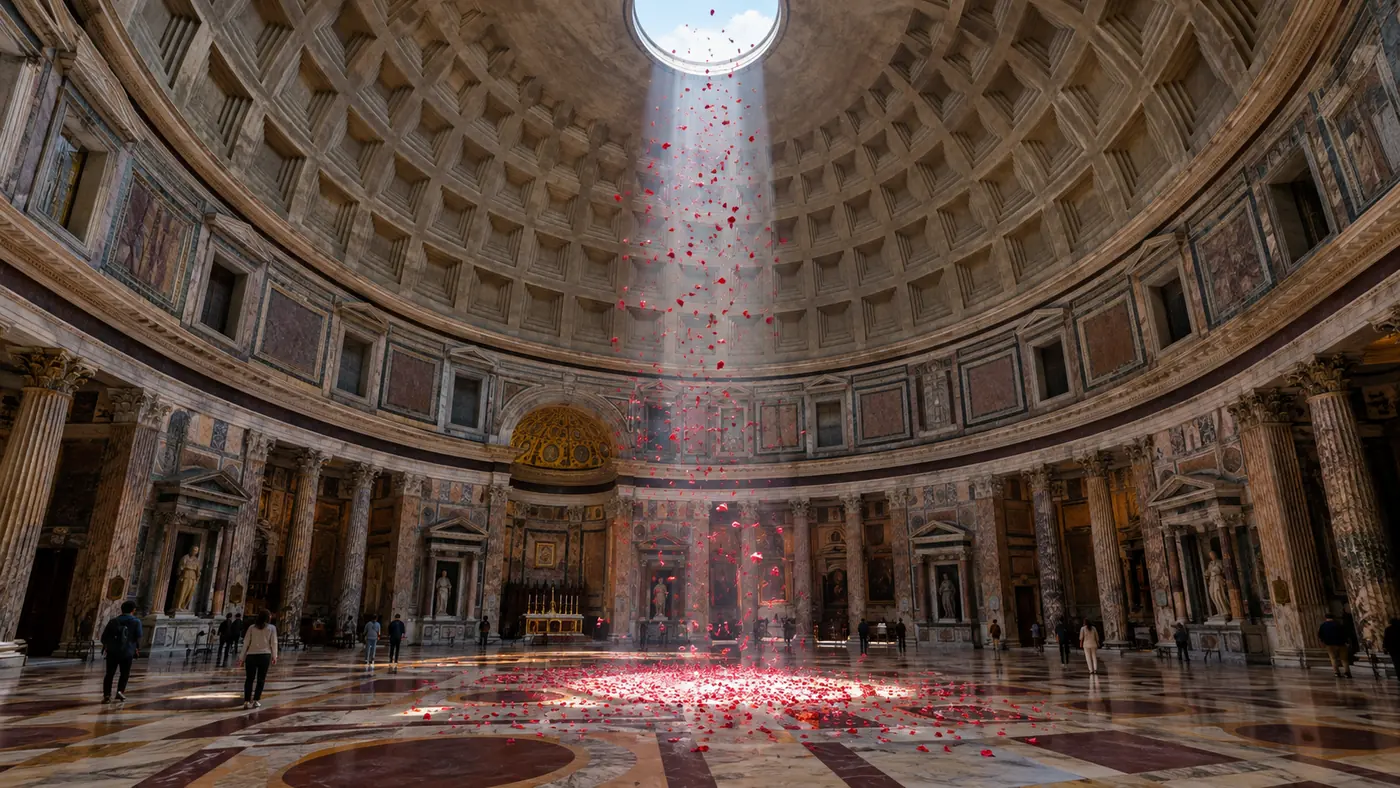
The Vigili del Fuoco (firefighters) drop red rose petals from the oculus. They fall onto the rotunda floor, in front of those inside.
In 2027, Pentecost falls on Sunday 16 May. Details are in the rain of petals at Pentecost. For Raphael's and the kings' burials, the rest of the story is in what to see in the Pantheon.
A live guide telling the story of Agrippa, Hadrian, and 609 under the dome, with the ticket included.
Check dates for the guided tour with ticketFrequent questions
How old is the Pantheon?
The current building was probably dedicated around 126 AD: almost 1,900 years. Agrippa’s first temple on the same site is older.
Who turned the Pantheon into a church?
Pope Boniface IV, on May 13, 609, after Byzantine Emperor Phocas had donated the building to him.
How tall is the Pantheon’s dome?
43.3 metres to the oculus, exactly the same as the internal diameter.
Who was Agrippa?
Marcus Agrippa built the first temple, in the time of Augustus. His name is still on the facade, replaced by Hadrian.
Ready to book
Choose your visit
Free cancellation up to 24 hours before on every option. Prices are starting prices in USD and change with the season.
Semi-private tour with an archaeologist
The most technical story: how the dome stands
Pantheon with access to the Basilica of Neptune
The Roman ruins behind the Pantheon, with a guide
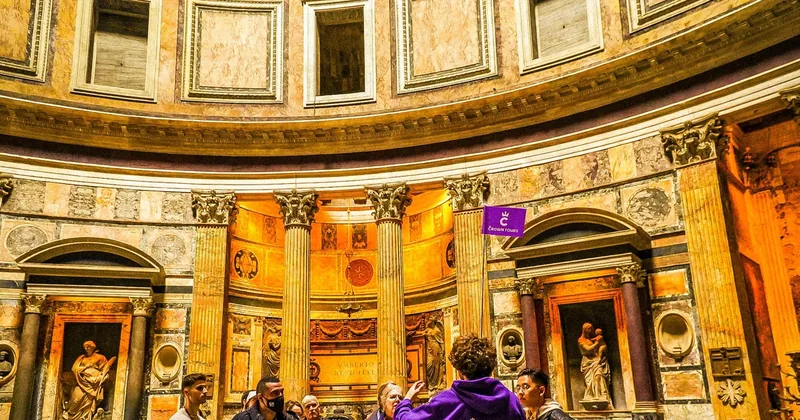
Guided tour of the Pantheon with ticket
- Live guide inside the Pantheon
- Entry ticket included
- Three meeting points, depending on the option